
U.S. Inflation Climbs to 3.8%, Pressuring Household Budgets Nationwide
American consumers are facing tighter financial conditions as a primary inflation metric accelerated to 3.8% in April.
Data from the Commerce Department reveals this figure marks the highest point in three years, moving up from the 3.5% rate recorded in March. While monthly prices crept up by 0.4%—a slight deceleration from March’s 0.7% surge—the persistent upward pressure keeps the Federal Reserve on high alert.
This economic shift introduces fresh complications for household balance sheets and alters the political outlook with midterm elections just five months away.
Price Pressures Broaden

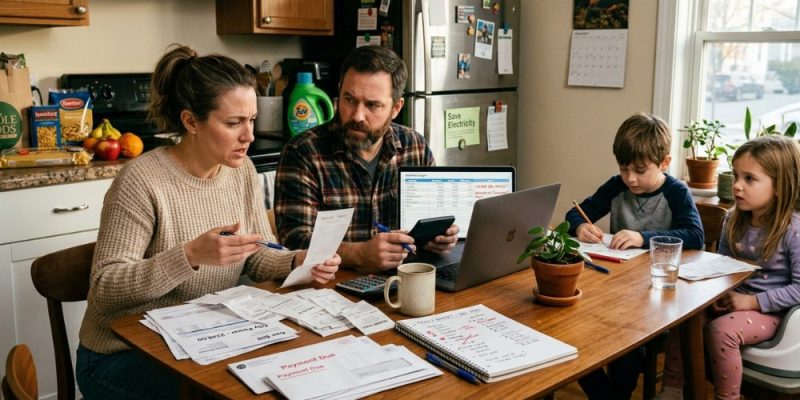
Magnific | Rising prices for everyday goods and services continue making household budgets harder to manage.
The sting of inflation extends well beyond the gas pump. Families are seeing higher receipts for grocery staples, clothing, and basic utilities like electricity. These widespread increases suggest that elevated prices might linger longer than economists initially predicted.
Core inflation, which strips out volatile food and energy costs to reveal underlying trends, edged up to 3.3% from 3.2% the previous month. On a positive note, core prices grew by just 0.2% on a monthly basis, offering a small sign of cooling compared to the 0.3% bump seen in March.
Even so, the numbers stay well north of the Federal Reserve’s 2% target, sparking talk that central bank officials might completely abandon interest rate cuts this year. In fact, some policymakers hint that the next policy shift could be a rate hike.
Income and Spending Imbalance
While prices climb, American income growth has flatlined. Overall personal income showed zero growth from March to April, partly because agricultural subsidies dropped off after a major government aid program wrapped up. When accounting for inflation, real disposable income actually dipped by 0.1%.
On the flip side, consumer spending rose by 0.5% in April. However, a closer look shows that this increase mostly reflects the higher cost of goods rather than people buying more items. Adjusted for inflation, real spending grew by a meager 0.1%, dropping from the 0.3% pace seen the month prior.
“Signs of stress are building inside the American household across the economy,” said Joe Brusuelas, chief economist at RSM. “Inflation-adjusted spending, disposable income … point to a slowing in May spending as inflation approaches a peak on the back of a historic supply shock.”
Broader Economic Factors
A separate report from the Commerce Department adjusted first-quarter Gross Domestic Product (GDP) growth down to a modest 1.6% annual pace. This is a step down from the initial 2% estimate, though it marks a recovery from the 0.5% expansion at the end of 2025, which suffered from a 43-day federal government shutdown. Notably, this first-quarter window included the opening month of the conflict in Iran.
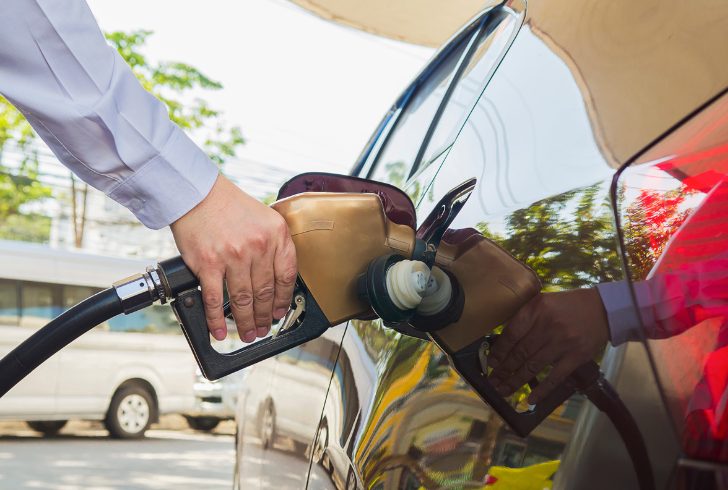
Freepik | Fuel prices have surged roughly 48% since the conflict began, currently averaging $4.43 a gallon.
Fuel costs remain an obvious pain point. Regular gasoline averaged $4.50 a gallon nationwide for three weeks before ticking down to $4.43. To put that in perspective, fuel sat at an average of $2.98 a gallon the day before the conflict began.
Beyond energy, everyday services are driving the index higher. Teeth cleanings, automotive repairs, and veterinary visits all show sharp price increases. Additionally, heavy corporate investment in artificial intelligence infrastructure is pushing up the wholesale cost of computer systems and software, adding another hidden layer to the country’s inflationary mix.
The persistence of these figures complicates the Federal Reserve’s timeline for normalizing the economy. Consumers continue to adapt by pulling back on discretionary purchases as basic living expenses command a larger share of their take-home pay.
Economic analysts expect spending patterns to cool further through the summer months unless wage growth begins to outpace these stubborn fixed costs.
More in Money
-
`
 Why Business Owners Are Working Harder Than Ever But Still Not Growing
Hard work is not the issue for most business owners. Long hours, rising revenue, and constant activity often create the illusion...
May 15, 2026 -
`
How Family Environment Shapes Life Outcomes Across Generations
A child’s early surroundings often leave a mark that follows far beyond childhood years. New research published in The BMJ points...
May 8, 2026 -
`
Why Single-Family Rentals Have Become the New Foundation for Family Stability
Choosing a home as a family isn’t just about finding the right place—it’s about managing competing priorities like cost, space, and...
April 10, 2026 -
`
Here’s What We Know About Jeff Bezos’ Seven Kids
Jeff Bezos built Amazon into one of the most powerful companies on the planet. Yet away from boardrooms and rocket launches,...
March 13, 2026 -
`
Kylie Jenner & Timothée Chalamet Are ‘Eager’ to Have Babies
Kylie Jenner and Timothée Chalamet are not playing around anymore. What started as a surprising romance in early 2023 has grown...
February 14, 2026 -
`
5 Realistic Ways of Re-connecting Your Family in This Digital Age
Family life feels louder than ever, yet strangely quiet at the same time. Everyone is home, but no one is really...
January 17, 2026 -
`
George Clooney Says His Kids Don’t Care Much About His Fame
George Clooney has starred in major hits, collected awards, and stayed one of the most recognizable faces in entertainment, yet none...
December 21, 2025 -
`
Kanye West Accuses Kim Kardashian of Distancing Children From Him
Kanye West is not holding back. The 48-year-old rapper says Kim Kardashian is putting space between him and their kids. According...
November 22, 2025 -
`
How Losing a Family Pet Can Teach Your Kids About Death & Grief
No one wants to see their kid cry over a pet, but it happens. Pets don’t live forever, and when they...
October 24, 2025









More From Wordsa
-
Justin Bieber Spotted Performing at MacArthur Park in LA
Justin Bieber gave Los Angeles parkgoers an unexpected moment when he joined fellow musicians for a casual performance at MacArthur Park....
CelebrityOctober 8, 2026 -
Kauai Small Businesses Welcome Tourists Back After Hurricane Lowell
Hurricane Lowell left Kauai facing a difficult recovery after the Sept. 7 storm knocked out power, damaged roads, toppled trees, and...
MoneyOctober 1, 2026 -
Is Your Child Being Bullied? 2 Signs Parents Should Watch For
Bullying does not always leave visible marks. A child may come home with no injuries and still carry fear, stress, or...
FamilySeptember 25, 2026 -
Feeling Like You Never Have Enough? Try This Simple Habit
More money, better achievements, and new possessions can feel satisfying, but that feeling often fades faster than expected. Once a new...
Life HacksSeptember 18, 2026 -
Robert De Niro Opens Up About Balancing Career and Fatherhood
Balancing a major acting career with family life can be difficult, and Robert De Niro says there is no simple formula...
CelebritySeptember 11, 2026





You must be logged in to post a comment Login