
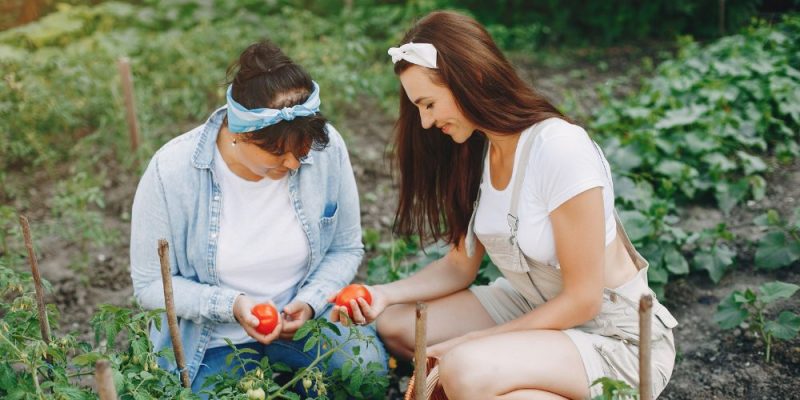
Why Home Gardening Is Rising (And It’s Not Just About Food Prices!)
Interest in home gardening continues to rise, and rising grocery prices are only part of the story. A sharper increase in produce costs, especially tomatoes, has already pushed many households to reconsider growing food at home. Yet another concern is gaining attention, known as “nutrition dilution,” which is shifting how fresh food is viewed beyond price tags.
Reports and research suggest that food quality is changing in ways not always visible at the store. A 2024 report from the National Institutes for Health points to “an alarming decline in the nutritional quality of foods.”
The findings show that common fruits and vegetables such as apples, oranges, bananas, tomatoes, and potatoes have lost nearly 25% to 50% of their nutritional content over the past 50 to 70 years.
Changing Quality of Modern Produce

Freepik | Growing dietary trends show a rise in calorie-rich but nutrient-poor food consumption.
The decline in nutrients is linked to how modern farming systems operate. Many commercial crop varieties are designed for higher yield, faster growth, and resistance to pests and diseases, while nutrient concentration often takes a back seat.
Several additional factors also play a role. Soil in large-scale farming can lose minerals due to repeated intensive production cycles. At the same time, fertilizer costs sometimes limit replenishment, which affects long-term soil balance.
Storage and transportation add another layer, since produce may spend days or weeks before reaching consumers. Rising carbon dioxide levels also influence plant growth, increasing sugars and starch content while reducing mineral density.
As a result, concerns are growing that people may be consuming diets that leave them “overfed but under-nourished due to consuming nutrient-poor diets,” according to the NIH report.
Why Home-Grown Food Stands Out
Home gardening offers a practical way to address some of these gaps without relying on large-scale agricultural changes. One major advantage is timing. Vegetables harvested at home can be eaten soon after picking, which helps preserve nutrients that normally decline during storage and transport.
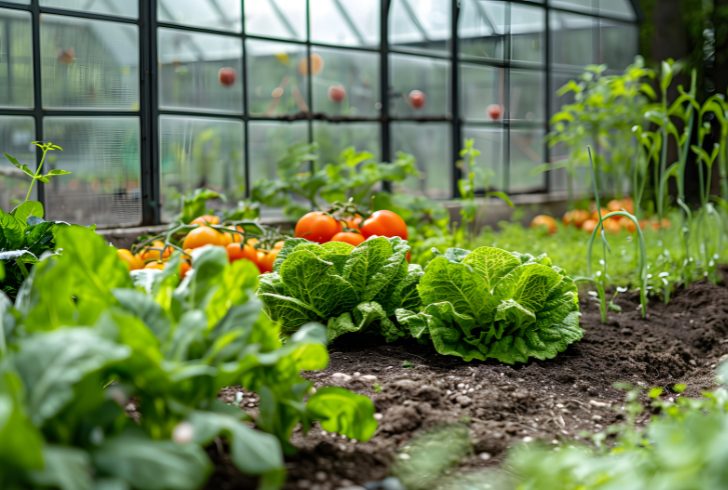
Instagram | Harvesting vegetables at home ensures peak nutrient preservation by eliminating storage and transport time.
Ripeness also plays a key role. Produce picked at peak maturity generally contains higher nutritional value, while commercial crops are often harvested early to withstand shipping and shelf life demands. Home gardens remove that delay, allowing crops to reach full ripeness naturally.
Another advantage lies in variety selection. Gardeners can choose crops based on flavor, growth patterns, or nutrient content instead of commercial priorities like shelf durability or uniform appearance.
Soil quality management also becomes more direct in smaller spaces. Compost use, pH balance, and nutrient replenishment can be closely monitored, helping maintain healthier growing conditions compared to large industrial farms. In addition, control over pesticides, wax coatings, and preservatives remains entirely in the hands of the grower.
Home gardening reflects more than a response to rising grocery prices. It highlights a shift toward fresher harvests, stronger nutrient retention, and greater control over what reaches the plate. As concerns around food quality continue to grow, cultivating vegetables at home offers a simple and direct way to reconnect with fresher, more nutrient-conscious eating habits.
More in Life Hacks
-
`
 Kanye West Ranked as “2026’s Most Canceled Celebrity” in New Study
Kanye West continues making headlines across music, fashion, and social media. However, controversy still follows the rapper everywhere. A new study...
May 22, 2026 -
`
Why Business Owners Are Working Harder Than Ever But Still Not Growing
Hard work is not the issue for most business owners. Long hours, rising revenue, and constant activity often create the illusion...
May 15, 2026 -
`
How Family Environment Shapes Life Outcomes Across Generations
A child’s early surroundings often leave a mark that follows far beyond childhood years. New research published in The BMJ points...
May 8, 2026 -
`
Why Single-Family Rentals Have Become the New Foundation for Family Stability
Choosing a home as a family isn’t just about finding the right place—it’s about managing competing priorities like cost, space, and...
April 10, 2026 -
`
Here’s What We Know About Jeff Bezos’ Seven Kids
Jeff Bezos built Amazon into one of the most powerful companies on the planet. Yet away from boardrooms and rocket launches,...
March 13, 2026 -
`
Kylie Jenner & Timothée Chalamet Are ‘Eager’ to Have Babies
Kylie Jenner and Timothée Chalamet are not playing around anymore. What started as a surprising romance in early 2023 has grown...
February 14, 2026 -
`
5 Realistic Ways of Re-connecting Your Family in This Digital Age
Family life feels louder than ever, yet strangely quiet at the same time. Everyone is home, but no one is really...
January 17, 2026 -
`
George Clooney Says His Kids Don’t Care Much About His Fame
George Clooney has starred in major hits, collected awards, and stayed one of the most recognizable faces in entertainment, yet none...
December 21, 2025 -
`
Kanye West Accuses Kim Kardashian of Distancing Children From Him
Kanye West is not holding back. The 48-year-old rapper says Kim Kardashian is putting space between him and their kids. According...
November 22, 2025









More From Wordsa
-
Can Cutting Ultra-Processed Foods Improve Mental Health?
Food choices may affect more than physical health. A small preliminary study from the University of California, San Francisco (UCSF) found...
Life HacksOctober 15, 2026 -
Justin Bieber Spotted Performing at MacArthur Park in LA
Justin Bieber gave Los Angeles parkgoers an unexpected moment when he joined fellow musicians for a casual performance at MacArthur Park....
CelebrityOctober 8, 2026 -
Kauai Small Businesses Welcome Tourists Back After Hurricane Lowell
Hurricane Lowell left Kauai facing a difficult recovery after the Sept. 7 storm knocked out power, damaged roads, toppled trees, and...
MoneyOctober 1, 2026 -
Is Your Child Being Bullied? 2 Signs Parents Should Watch For
Bullying does not always leave visible marks. A child may come home with no injuries and still carry fear, stress, or...
FamilySeptember 25, 2026 -
Feeling Like You Never Have Enough? Try This Simple Habit
More money, better achievements, and new possessions can feel satisfying, but that feeling often fades faster than expected. Once a new...
Life HacksSeptember 18, 2026





You must be logged in to post a comment Login